5-Ingredient Cacio e Pepe with Pecorino Romano
Pasta, cheese, pepper. Done in 20 minutes. No excuses tonight.
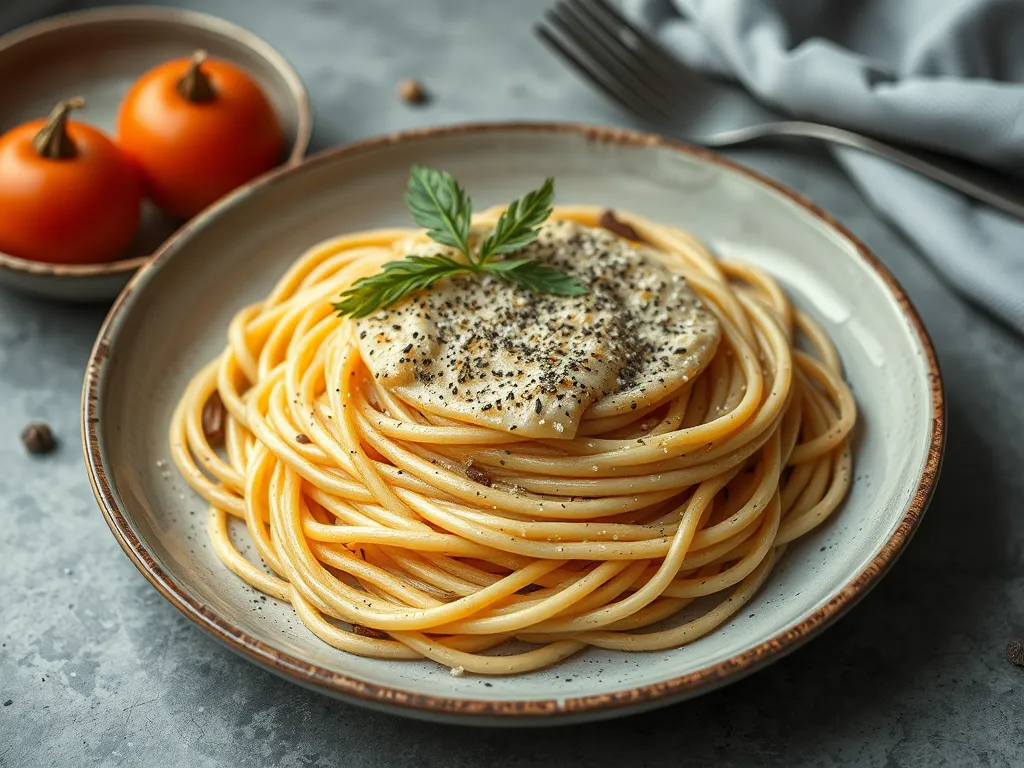
When you're too tired to think but still want something that feels like a real dinner, cacio e pepe is the answer. This is a genuine Roman classic — spaghetti coated in a glossy, peppery pecorino sauce — and it comes together in about 20 minutes with five ingredients you probably already have. Fair warning: the sauce can seize up into clumps if you rush it, but this recipe walks you through the one trick that makes it silky every time. Low effort, high reward, and it tastes like you actually tried.
Ingredients
- 8 oz spaghetti — or tonnarelli if you can find it
- 3 oz Pecorino Romano — finely grated on a microplane — pre-grated from a bag will not melt properly
- 1.5 tsp coarsely ground black pepper — freshly cracked is non-negotiable here; pre-ground tastes flat
- 1 tbsp unsalted butter — helps the sauce emulsify and adds a little richness
- 1 tsp kosher salt — for the pasta water — use less if your pot is small
Method
- 1 Bring a medium pot of water to a boil. Add the kosher salt. Note: use less water than usual — about 2 quarts — so the starch concentration is higher, which helps the sauce later.
- 2 While the water heats, finely grate the Pecorino Romano on a microplane into a small bowl. Set aside at room temperature.
- 3 Toast the black pepper in a large dry skillet over medium heat for 60–90 seconds, stirring, until fragrant. Remove from heat and let the pan cool slightly — about 1 minute.
- 4 Cook the spaghetti in the boiling salted water until 2 minutes shy of al dente per the package directions. Before draining, scoop out at least 1 cup of pasta water and set it aside.
- 5 Add the butter to the skillet with the toasted pepper and melt over medium-low heat.
- 6 Use tongs to transfer the spaghetti directly from the pot into the skillet — don't drain it, just let it drip. Add 1/4 cup of the reserved pasta water. Toss the pasta constantly over medium-low heat for 1–2 minutes until the water reduces slightly and the pasta is al dente.
- 7 Remove the skillet from heat. This step is critical: let it cool for 30 seconds so it's no longer actively simmering.
- 8 Add the grated Pecorino in two batches, tossing vigorously and adding pasta water a splash at a time (1–2 tbsp) as needed to keep things moving. The goal is a glossy, creamy sauce that coats every strand — not clumps, not soup. Work quickly but calmly.
- 9 Taste for salt (Pecorino is salty, so you may not need any). Plate immediately and finish with a little extra cracked pepper on top.
Variations
- Half Parmesan — Swap half the Pecorino for finely grated Parmigiano-Reggiano for a slightly milder, nuttier flavor. Still vegetarian, still only 5 ingredients.
- Gluten-free swap — Use a good-quality gluten-free spaghetti (rice or corn-based). The sauce technique is identical — just watch the cook time since GF pasta can go mushy fast.
- Add a yolk for extra richness — Whisk one egg yolk into the grated Pecorino before adding it to the pan. It makes the sauce even silkier and more forgiving — closer to a carbonara texture.
Notes
The number one mistake with cacio e pepe is adding cheese to a pan that's too hot — it seizes into rubbery clumps. Pull the pan off heat and let it cool before adding the cheese. Microplane-grated Pecorino melts almost instantly; block cheese grated on a box grater is too coarse and will clump. Leftovers don't reheat well — the sauce turns gluey — so make what you'll eat tonight.
Equipment that helps
- Microplane grater — Produces ultra-fine Pecorino that melts into a smooth sauce instead of clumping — a box grater won't give you the same result here.
- Large skillet (12-inch) — Wide surface area lets you toss the pasta aggressively so the sauce emulsifies evenly rather than pooling at the bottom.
Find more dinners like this
More like this